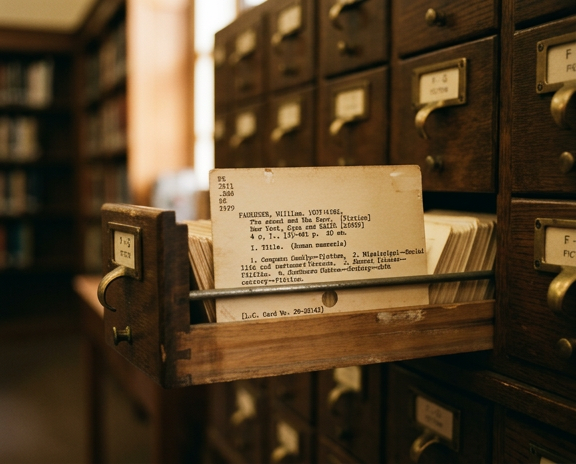
When a reader searches for a book on Amazon, Apple Books, or Kobo, they are not browsing a physical shelf — they are querying a database. The results they see are determined not by a bookseller's intuition or a display table curated by a knowledgeable buyer, but by an algorithm processing metadata: the structured information attached to each book in the retailer's catalogue.
This means that a well-written, beautifully produced book with poor metadata is, in practical terms, harder to find than a mediocre book with excellent metadata. The algorithm does not read your prose. It reads your title, subtitle, description, categories, and keywords — and it serves results accordingly.
What metadata actually is
Metadata is the set of structured data fields that describe your book to retail systems. At minimum, this includes your title, subtitle, author name, ISBN, language, publication date, and price. But the fields that most directly affect discoverability are your BISAC categories, your keywords, and your book description.
BISAC codes — the Book Industry Standards and Communications classification system — are the taxonomy that retailers use to shelve your book digitally. Every retailer maps BISAC codes to their own category structure. Choosing the right codes is the first step in ensuring your book appears in the right browse categories.
Categories and keywords
Most platforms allow you to select two or three categories for your book. The temptation is to choose the most prominent, competitive categories — Fiction, Biography, History. Resist this. In large categories, a new or modestly selling book will be buried dozens of pages deep in search results. The better strategy is to find specific subcategories where your book can genuinely compete.
Being number twelve in a niche subcategory is worth more than being page forty in a broad one. Specificity is discoverability.
Keywords work differently from categories — they are search terms rather than classification codes, and they are not visible to readers. They work behind the scenes to connect your book to the search queries your potential readers are actually typing. Effective keywords are specific, relevant, and drawn from the language readers use rather than the language publishers use.
- Use phrases, not single words — "literary fiction set in Montreal" outperforms "literary fiction"
- Think like a reader searching, not a writer describing
- Research which keywords competing titles in your category are using
- Avoid keywords that are accurate but too broad to be useful
- Revisit and update your keywords periodically — search behaviour changes
The description
Your book description serves two audiences simultaneously: the algorithm and the reader. For the algorithm, it is a source of additional keyword signals. For the reader, it is the moment of decision — the text that determines whether someone who has found your book will actually buy it.
A good description is not a synopsis and not a review. It is closer to a pitch — a concentrated version of the book's central appeal, written to create a specific emotional response in the reader most likely to love it. It should establish the premise, hint at the stakes, and leave the reader wanting to know what happens next or what argument the book makes.
Getting it right from the start
Metadata is far easier to get right at the point of publication than to correct afterwards. Changing categories and keywords after a book is live is possible on most platforms, but the book's initial sales history — which influences algorithmic ranking — is already established. A book that launches with strong metadata builds momentum; one that launches poorly and is later corrected is fighting an uphill battle.
Treat your metadata with the same care you give your manuscript. It is not administrative paperwork — it is the bridge between your finished book and the readers who would love it, if only they could find it.